
Little Sage in class, ages 5 to 7
Online safety for your youngest pupils, on the class screen
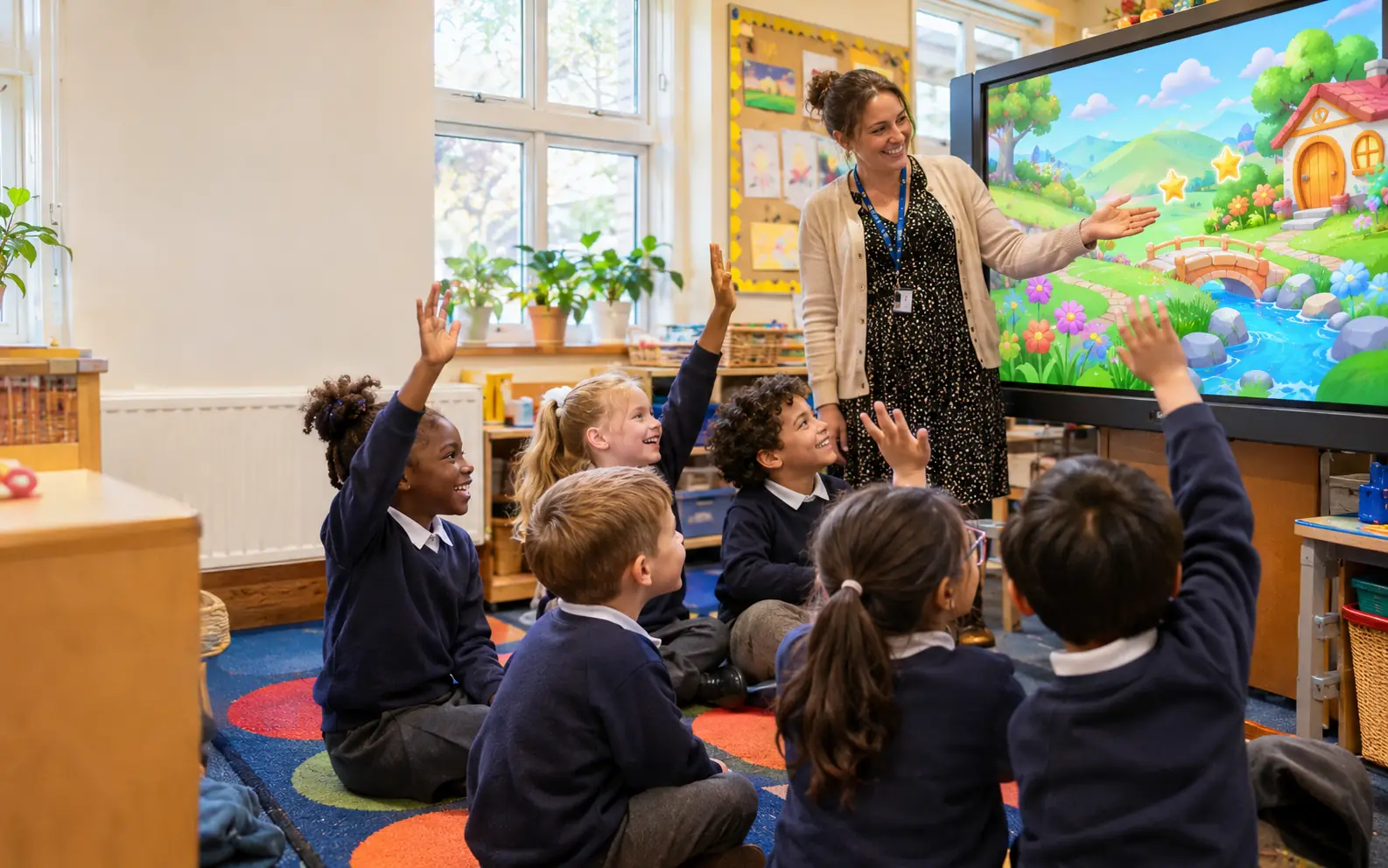
Ten short lessons to show and talk through together, about 10 to 15 minutes each. Sage, the Little Sage guide, leads each one. Children don't need a device or an account.
Part of the school plan
All ten lessons and their teacher notes come with your school’s plan, with every member of staff included. “People who help” is free for anyone to try.
- Lesson 1
Who are you talking to?
We are learning that people online are not always who they say they are, and to tell a grown-up if someone we don't know talks to us.
Online relationships
With the school plan
- Lesson 2
Feelings online
We are learning to notice how things on a screen make us feel, and that it is always okay to stop and tell a grown-up.
Health, well-being and lifestyle
With the school plan
- Lesson 3Free to try
People who help
We are learning to name the grown-ups we can go to for help, at home and at school.
Online relationships
Open the lesson - Lesson 4
Real and pretend
We are learning that some things on a screen are pretend, and to ask a grown-up when we are not sure.
Managing online information
With the school plan
- Lesson 5
Asking first
We are learning to ask a grown-up before we go online or press something new.
Privacy and security
With the school plan
- Lesson 6
Keeping your details private
We are learning which things about us are private, like our name, our school and where we live.
Privacy and security
With the school plan
- Lesson 7
Being you online
We are learning that people can look and sound different online, and that being ourselves is a good thing.
Self-image and identity
With the school plan
- Lesson 8
When words are unkind
We are learning that unkind words online still hurt, that we never have to reply, and to tell a grown-up.
Online bullying
With the school plan
- Lesson 9
Things you send stay
We are learning that when we send something, the other person keeps it, so it is worth a think first.
Online reputation
With the school plan
- Lesson 10
Everything belongs to someone
We are learning that pictures, songs and videos are made by people, and that asking first is kind.
Copyright and ownership
With the school plan
Curriculum map
How each lesson supports Computing at key stage 1 in England and the UK Council for Internet Safety (UKCIS) framework, Education for a Connected World.
| Lesson | We are learning | Education for a Connected World strand |
|---|---|---|
| 1. Who are you talking to? | that people online are not always who they say they are, and to tell a grown-up if someone we don't know talks to us. | Online relationships |
| 2. Feelings online | to notice how things on a screen make us feel, and that it is always okay to stop and tell a grown-up. | Health, well-being and lifestyle |
| 3. People who help | to name the grown-ups we can go to for help, at home and at school. | Online relationships |
| 4. Real and pretend | that some things on a screen are pretend, and to ask a grown-up when we are not sure. | Managing online information |
| 5. Asking first | to ask a grown-up before we go online or press something new. | Privacy and security |
| 6. Keeping your details private | which things about us are private, like our name, our school and where we live. | Privacy and security |
| 7. Being you online | that people can look and sound different online, and that being ourselves is a good thing. | Self-image and identity |
| 8. When words are unkind | that unkind words online still hurt, that we never have to reply, and to tell a grown-up. | Online bullying |
| 9. Things you send stay | that when we send something, the other person keeps it, so it is worth a think first. | Online reputation |
| 10. Everything belongs to someone | that pictures, songs and videos are made by people, and that asking first is kind. | Copyright and ownership |
Every lesson supports Computing, key stage 1: “Use technology safely and respectfully, keeping personal information private; identify where to go for help and support when they have concerns about content or contact on the internet or other online technologies.”